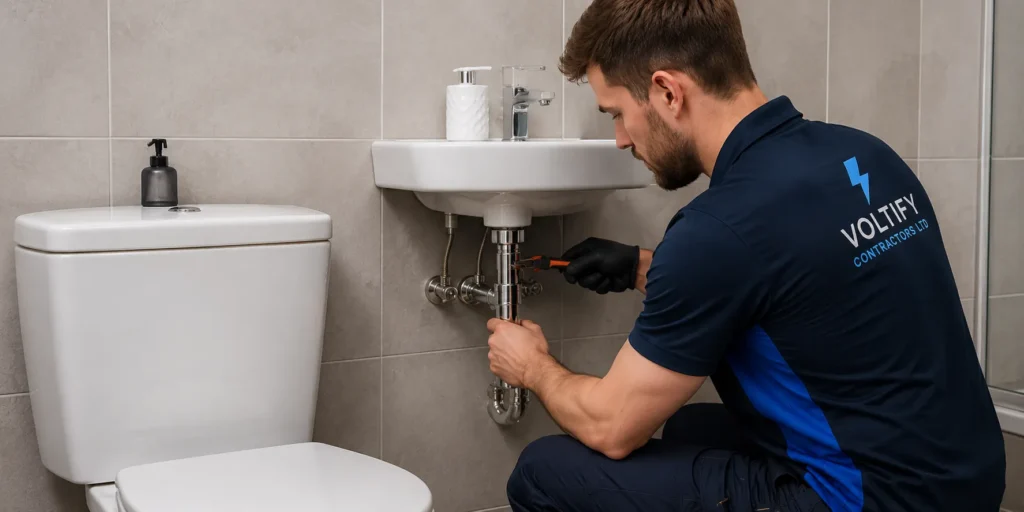

“Electrical testing,” “inspection” and “safety check” are used loosely online to describe several different things — from a specific formal certificate, to a general assessment of a property’s electrics, to testing carried out as part of a repair. It’s easy to search for one term and land on services that don’t actually match what you need. This page explains what these terms typically mean in a property-service context and what a professional assessment from Voltify Contractors can involve, so you know what you’re arranging before you book — and where it fits among our wider electrical services.
What These Testing and Inspection Terms Usually Mean
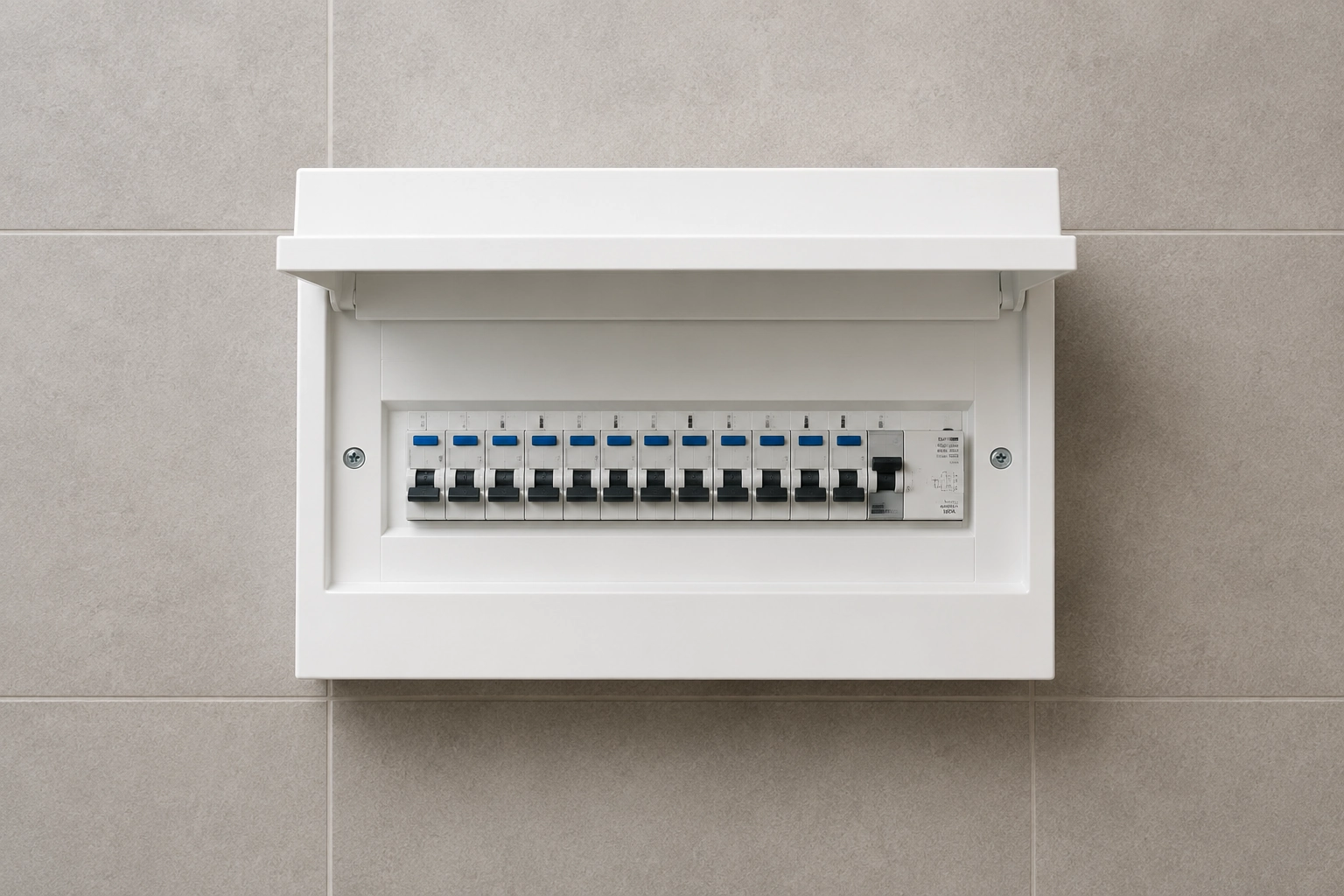
- Electrical testing generally refers to checking that circuits, accessories and protective devices are performing as they should — for example, that an RCD or RCBO trips correctly, or that a circuit doesn’t show signs of a fault under test conditions.
- Inspection usually means a visual and physical assessment of the installation’s condition — checking for damage, wear, incorrect previous work, or components that are outdated or unsafe.
- Safety check is often used as an umbrella term for either or both of the above, particularly by homeowners rather than tradespeople.
- A formal certificate (such as an Electrical Installation Condition Report, sometimes searched for by its abbreviation) is a specific, regulated document produced after a defined inspection and testing process. Not every testing or inspection visit results in this kind of formal certificate — see the note below.
When to Arrange an Electrical Safety Check in London
Common, genuine reasons include:
- moving into a property and wanting the existing electrics assessed;
- an older installation that has never been formally checked;
- recurring but currently non-urgent concerns, such as occasional tripping that isn’t happening right now;
- preparing to sell, let, renovate or extend a property;
- general reassurance about the condition of a property’s electrics.
If there’s an active fault happening right now — something currently tripping, sparking, or not working — that’s usually better handled through fault finding or an emergency call-out rather than a scheduled inspection, because the priority is resolving the live issue rather than a broader assessment.
Testing & Inspection vs Fault Finding: What’s the Difference?
| You want… | Better starting point |
|---|---|
| A general assessment of your property’s electrical condition, with no specific active problem | Electrical Testing, Inspection & Safety Checks (this page) |
| A specific, currently-happening problem diagnosed (tripping now, no power now, flickering now) | Electrical Fault Finding |
| A known, identified accessory or fitting repaired | Electrical Repairs |
| Something urgent and unsafe right now | Emergency Electrician |
Put simply: inspection and testing looks at overall condition; fault finding chases a specific problem that’s actively happening.
What a Professional Electrical Assessment Can Look At
At a high level, a property electrical assessment may involve checking the condition and apparent safety of visible wiring and accessories, confirming that protective devices such as RCDs operate correctly, and identifying any obvious deterioration, damage or non-standard previous work. The exact scope depends on what’s being arranged and the size and age of the installation. This page describes the kind of assessment available, rather than a specific regulated report — see the certification note below for how that distinction affects what’s provided at the end of a visit. For independent guidance on home electrical safety and periodic checks, see Electrical Safety First. Our guide to what an electrical safety check covers also explains the different types of check and how to read the results.
What Happens If an Issue Is Found
If testing or inspection identifies a problem, the next step depends on what’s found: a straightforward repair, a referral to fault finding if the cause isn’t fully clear, or — for something like an ageing consumer unit — a conversation about replacement. Nothing is assumed in advance; findings are explained clearly so you can decide how to proceed.
What Affects the Scope and Cost of Testing or Inspection
- Size of the property and number of circuits — more circuits generally means more to check.
- Access — areas that are harder to reach (lofts, under-floor voids, behind fitted units) can extend the time needed.
- Age and history of the installation — older or previously altered installations can take longer to assess properly.
- What’s actually being arranged — a general safety check is a different scope to testing carried out around a specific piece of work.
The documented minimum call-out is £80 for the first hour; a full assessment of a property is a different scope of work and is confirmed once the size and condition of the installation are known.
A Note on Formal Electrical Certificates
If what you actually need is a specific regulated report — most commonly searched for by its abbreviation, EICR — or a Portable Appliance Testing (PAT) certificate for movable equipment, please contact us directly to confirm whether this is something we can arrange for your situation before booking.
Areas We Cover for Electrical Testing & Inspection
Voltify Contractors carries out electrical testing, inspection and safety-check work across East and South-East London, including Canary Wharf & E14, Stratford & E15, Bow & E3, Canning Town & E16, Greenwich & SE10, Woolwich & SE18 and Barking & IG11. See the areas we cover for full details.