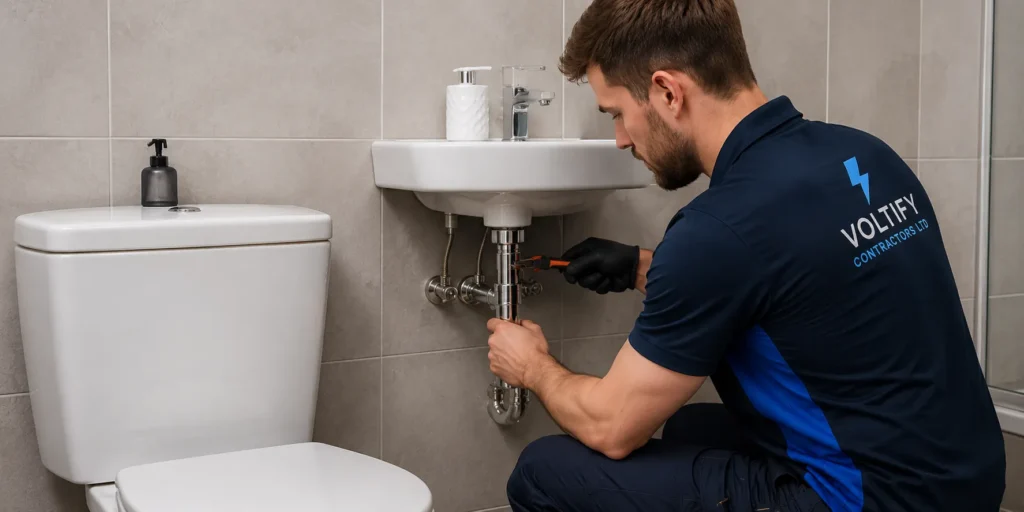

A handyman carries out the small, varied jobs that keep a property working and looking right: repairs, fitting, adjustments and general upkeep that are too small, or too mixed, to justify booking a separate specialist for each one. A door that sticks, a blind that needs putting up, a cracked tile, a loose bannister and a shelf for a plasterboard wall are all typical handyman jobs.
What a handyman does not do matters just as much. There is no legal definition of “handyman” in the UK, so the scope changes from one person to the next. The more useful question is not “can a handyman do this?” but “does this job need a particular trade, a registration or specialist equipment?” The rest of this guide works through where that line usually falls.
The four kinds of work that suit a handyman
What handyman jobs have in common is that each one is self-contained, needs general practical skill and the right tools rather than a specialist qualification, and can usually be finished in a few hours or less.
Fitting and fixing
Putting up shelves, mirrors, pictures, curtain poles, blinds and TV brackets; assembling flat-pack furniture and anchoring tall units to the wall; fitting coat hooks, door stops and bathroom accessories. Most of the skill here is about the wall rather than the item. Solid brick, plasterboard on timber studs and old lath-and-plaster each need different fixings, and the fixings supplied in the box are often too light for the wall they are going into.
Small repairs
Easing doors that catch, replacing worn hinges and handles, refixing loose skirting or architrave, patching small holes and cracks in plaster, replacing a cracked tile and renewing tired sealant around a bath or worktop. These are repairs to things that are worn or damaged, not to the systems hidden behind them. Our guide to what a general property repairs callout covers explains how much fits into one visit and what is charged on top.
Minor plumbing and electrical items
Many handymen will replace like-for-like parts, such as a tap, a toilet seat, a light fitting or a damaged socket faceplate. This is where scope varies most between providers, and where regulations start to matter.
Upkeep and odd jobs
Touching in paintwork, adjusting cupboard doors, re-hanging a gate, refixing a loose curtain track. These are the jobs that build up quietly and only get noticed when a property is being sold, let or inspected.
Handyman or specialist? Look at what the job changes
Size is a poor guide. A ten-minute job can still be specialist work, and a long list of small jobs can still be handyman work. A better test is whether the job changes an item attached to a system or the system itself: the water supply, the wiring, the gas, or the structure.
| Job | Handyman job? | Why |
|---|---|---|
| Fitting a shelf or curtain pole | Yes | General fixing work; the main skill is choosing a fixing that suits the wall and the load. |
| Replacing a dripping tap with a similar one | Often | Straightforward when the isolation valves work and the pipework is sound. It becomes plumbing work if pipes need altering. |
| Swapping a ceiling light for a new fitting | Sometimes | A like-for-like replacement on an existing circuit is minor electrical work, but it must still be done safely and to the wiring regulations. |
| Adding sockets or running a new circuit | No | Electrical installation work, and some of it is notifiable under the Building Regulations. |
| Damp patch on a ceiling | Not on its own | The stain is a symptom. The cause, often a leak above, needs tracing first. |
| Disconnecting or moving a gas hob or cooker | No | Gas work must be done by a Gas Safe registered engineer. |
| Painting a whole room or hallway | It depends | Possible, but preparation and drying time make it a decorating job rather than one item on a mixed list. |
| Removing a wall or making a new opening | No | Structural work needs proper assessment and usually building control involvement. |
Where the rules draw a firm line
Two areas have legal boundaries that apply to anyone doing the work, whatever they call themselves.
Gas. Fitting, fixing or moving a gas appliance, including a gas cooker or hob, must be done by an engineer on the Gas Safe Register. Gas Safe Register’s advice to householders is never to do this yourself or let anyone unregistered do it (Gas Safe Register).
Electrics. In England, Part P of the Building Regulations covers electrical safety in homes. Some work is notifiable, meaning it must be self-certified by an electrician registered with a competent person scheme or approved by building control: installing a new circuit, replacing a consumer unit, and adding to or altering a circuit in a room containing a bath or shower. Replacing accessories such as sockets, switches and light fittings on an existing circuit is generally not notifiable, but it must still meet the same safety requirements (Approved Document P, GOV.UK). Wales, Scotland and Northern Ireland have their own rules.
In practice, changing a cracked socket faceplate or a pendant light can sit comfortably on a handyman list. An extra socket in the bathroom or a new circuit for a garden light is electrical installation work and should be booked as such.
Assumptions that cause problems on the day
- “The handyman brings the parts.” Usually the customer buys the item being fitted, such as the shelf, blind or tap. Whether fixings and consumables are supplied varies, so ask when you book.
- “Small means simple.” A shelf above a radiator or a TV on a chimney breast may have pipes or cables in the wall behind it. Positions sometimes have to move once the wall has been checked.
- “A loose fitting just needs screwing back.” Skirting that keeps coming away or a tile that will not stay fixed can be hiding something else, such as damp or rotten timber. The quick fix only lasts if the cause is dealt with.
- “Any handyman can certify electrical work.” Certification of notifiable work depends on registration, not on the job title. If paperwork matters, for example for a sale or a letting, ask what you will receive before the work starts.
When the list crosses into other trades
The awkward gap with a traditional handyman is the point where a list turns into plumbing, electrical or decorating work and a second or third tradesperson has to be found. Voltify Contractors carries out electrical, plumbing, painting and decorating and appliance work as well as general handyman jobs, so a mixed list does not have to stop where one trade ends. Regulated work is still treated as what it is: gas work, for example, sits outside a handyman visit.
If you already have a list and want to know how it would be organised into a visit and how it is priced, our general handyman services page goes through it. The handyman and property maintenance hub lists the individual services, from TV mounting to door repairs. If you are keeping a rented property in order rather than tackling a one-off list, the landlord property maintenance checklist is a better starting point.
Common questions
Does a handyman need to be qualified?
There is no single qualification required for general handyman work in the UK. Specific types of work are regulated, though: gas work requires Gas Safe registration, and notifiable electrical work in England has to be certified through a competent person scheme or building control. Ask about the specific job rather than about qualifications in general.
Can a handyman do plastering?
Patching holes, filling cracks and repairing small damaged areas of plaster or plasterboard are typical handyman jobs. Skimming a whole wall or ceiling is a plastering job in its own right, because getting a large, flat, even finish is a specialist skill.