
Most of what makes a painted room look good happens before the paint tin is opened. Filling, sanding, cutting in cleanly against ceilings and skirting, and choosing a finish that suits how the room is used matter more to the result than the colour itself. That is the part of interior painting people tend to underestimate — and the part most likely to decide whether the walls still look right in three years.
Voltify Contractors paints living rooms, bedrooms, hallways, kitchens, bathrooms and whole properties across East and South-East London, including rented homes being turned round between tenants. The work covers walls, ceilings and interior woodwork, and forms part of our wider painting and decorating services. Outside walls, windows and doors face very different conditions and are covered on our exterior painting page, while offices, shops and communal areas are covered under commercial painting.
What an Interior Painting Job Includes
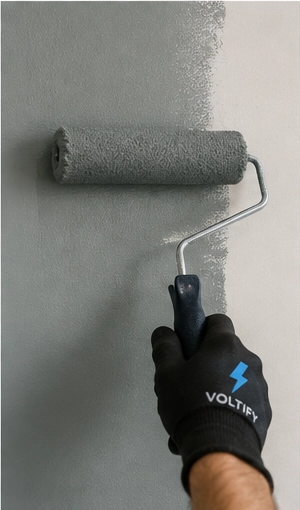
A typical room is worked from the top down, so drips and dust never fall on finished surfaces:
- Protecting the room — furniture moved to the centre and covered, floors sheeted, switches and sockets masked.
- Preparing the surfaces — filling cracks and holes, sanding filler flush, scraping any flaking paint, sugar-soaping greasy areas such as kitchen walls and around light switches, and caulking gaps where walls meet skirting and frames.
- Spot-priming — sealing filled patches, stains and bare plaster so they don’t show through as dull or shiny patches.
- Ceilings, then walls, usually two coats each.
- Woodwork last — skirting boards, door frames, doors, window boards and banisters.
- Clearing up — masking removed, furniture back in place, touch-ups checked in daylight.
Where walls need more than routine filling — large cracks, blown plaster or old wallpaper to remove — the preparation becomes a bigger job in its own right and is scoped separately before painting starts; our wall preparation and filling page explains what that involves. If you would rather paper the walls than paint them, see our wallpaper installation page. For what to decide, check and clear before the decorating starts, see our interior painting preparation checklist.
Choosing the Right Finish for Each Room
The sheen level changes how a wall looks and how well it copes with cleaning. As a general guide:
| Surface or room | Finish commonly used | Why |
|---|---|---|
| Living rooms and bedrooms | Matt or flat matt emulsion | Hides small wall imperfections; the most forgiving finish on older plaster |
| Hallways, stairs and children’s rooms | Durable or scrubbable matt | Looks like matt but stands up to wiping and scuffs |
| Kitchens and bathrooms | Kitchen/bathroom emulsion, often with a slight sheen | Resists moisture and steam, and helps discourage mould |
| Ceilings | Matt white emulsion | Reflects light evenly without showing roller marks |
| Skirting, doors and frames | Satin, eggshell or gloss | Harder-wearing; the higher the sheen, the easier to wipe, but the more it shows dents |
| Freshly plastered walls | A diluted “mist coat” first, then full coats | New plaster is very absorbent and needs sealing before normal emulsion will bond properly |
A higher sheen isn’t automatically better. On walls with patching or uneven plaster, a shinier finish will highlight every bump that a matt finish would disguise.
Painting Interior Woodwork
Woodwork often takes as long as the walls in the same room, because it is all brushwork and each edge has to be cut in by hand. Existing gloss usually needs keying with abrasive paper and cleaning so the new coat grips. Bare or knotty timber needs knotting solution and primer first, or resin can bleed through as brown marks.
It also helps to know what is already on the wood. Oil-based gloss gives a very hard finish but tends to yellow over time, particularly in rooms with little daylight. Water-based trim paints stay whiter and dry faster, but going from an old oil-based coat to a water-based one needs the right primer in between, or the new paint can peel.
Living in the Home While Rooms Are Painted
Interior painting is usually done room by room, so the rest of the property stays usable. A few things make it easier:
- Clear small items, pictures and curtains before the visit, and say if anything heavy or fragile can’t be moved.
- Expect the room to be out of use while coats dry. Most modern water-based emulsions are touch-dry quickly, but full hardness takes longer — especially on woodwork, so doors are best left ajar rather than closed on fresh paint.
- Keep the room ventilated during and after painting.
- If you’re in a rented property, check with your landlord or agent before choosing colours.
What Affects the Time and Price
Painting is priced on the work involved rather than on floor area alone. The main variables are:
- The condition of the walls — a room with sound, previously painted walls is quicker than one with cracks, patched plaster or flaking paint.
- Colour change — covering a dark or strong colour with a pale one can take extra coats.
- Ceiling height and stairwells — high ceilings and stairwells need more access equipment and take longer to cut in.
- How much woodwork — panelled doors, spindles and sash windows take far longer than flush doors and plain skirting.
- Furniture and access — a fully furnished room takes longer to protect and work around than an empty one.
- The paint itself — premium ranges, specialist stain-blocking primers and kitchen or bathroom paints cost more than standard trade emulsion, and the quantity depends on how many coats the surface needs.
Getting a Quote for Interior Painting
The most useful thing to send is a few photos of each room in daylight, rough room sizes or ceiling heights, and a note of which surfaces you want painted — walls only, or ceilings and woodwork as well. Mention any cracks, damp patches or stains you already know about, because damp in particular needs its cause dealt with before any paint will last.
Painting often comes alongside other small jobs such as refitting shelves, curtain poles or door handles; our handyman and property maintenance team can handle those at the same time. Get in touch with Voltify Contractors to arrange a look at the rooms, or check the areas we cover.