
The end of a tenancy is when small repairs suddenly matter. A scuffed wall, a loose cupboard door or a dripping tap can become a deposit deduction, a dispute, or a delay before the next tenant moves in. Voltify Contractors provides property maintenance in Blackwall as part of its documented E14 coverage, for tenants putting things right before they leave and for landlords and letting agents preparing a flat for re-letting. This page explains how wear and tear is usually told apart from damage, and which repairs are worth booking.
Wear and tear or damage?
A landlord can claim from a deposit for damage, but not for fair wear and tear. The Deposit Protection Service, one of the government-approved deposit schemes, describes fair wear and tear as reasonable use of the premises by the tenant and the ordinary operation of natural forces. Its guidance on reasonable deposit claims says adjudicators look at four things:
- How long the tenancy lasted. The longer the tenancy, the more natural wear there will be.
- How many people lived there. A family home is expected to show more marks than a flat with one occupant.
- The age and quality of the item. Older or cheaper fittings wear faster under normal use.
- Whether it is wear or damage. Light marks from everyday living are wear; burns, spills and breakages caused by carelessness are damage.
The same guidance warns against “betterment”: a landlord should not end up with a better property than at the start of the tenancy at the tenant’s expense, for example by charging the full cost of new carpet that was already several years old. Signed check-in and check-out inventories, ideally with dated photographs, are the main evidence either side will rely on.
Common check-out items and the repair that fits
How each item is treated depends on the inventory, the tenancy length and the condition at the start. This table shows how these items are commonly viewed and which type of work puts them right.
| What the check-out finds | Often treated as | Type of repair |
|---|---|---|
| Faded paint, light scuffs along hallways, minor marks behind furniture | Wear and tear, especially after a longer tenancy | Painting and decorating as part of normal re-letting upkeep |
| Holes from screws, nails or adhesive hooks, or walls painted a different colour without permission | Damage, depending on what the tenancy allowed | Filling, making good and repainting |
| Loose door handles, sticking doors, a wobbly shelf or a broken cupboard hinge | Wear if it has simply worked loose; damage if it has been broken | Handyman and property maintenance |
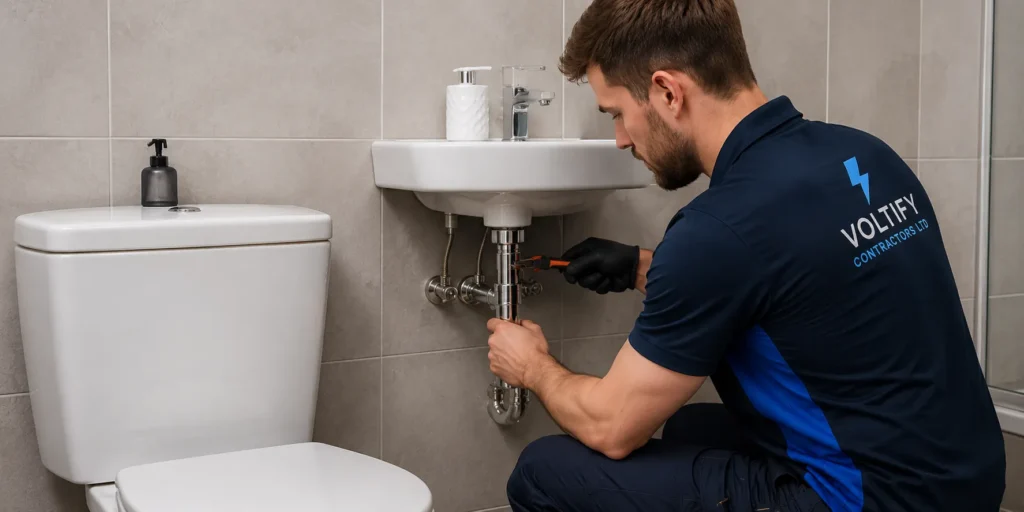
| A dripping tap, a running toilet or tired silicone around the bath | Usually wear, and the landlord’s repair | Plumbing |
| A cracked socket faceplate, a missing bulb cover or a broken light fitting | Depends on the cause | Electrical services |
| A washing machine or dishwasher that has stopped working | Depends on its age and how it was used | Appliance installation, if it needs replacing or reconnecting |
If you are the tenant moving out
Putting right damage you are responsible for before check-out can be cheaper than a deduction, but check your tenancy agreement first and tell your landlord or agent what you plan to do. A patch of paint that does not match, or filler that has not been sanded, can look worse than the original hole and still be listed on the check-out report. It helps to know the original paint colour and finish before anything is touched up.
Keep the invoice for any work you arrange and take dated photos once it is finished. Items that are the landlord’s repair, such as a worn tap washer or ageing appliance, should be reported rather than fixed at your own cost.
If you are the landlord or letting agent
The check-out report doubles as a works list. Separating it into items you may claim for and items that are normal upkeep makes it easier to agree deductions and to book one visit that clears everything before the next tenant arrives. The landlord property maintenance page explains how repairs between tenancies are usually organised.
According to GOV.UK, the deposit must be returned within 10 days of both sides agreeing how much is being repaid. If you cannot agree, the deposit protection scheme offers a free dispute resolution service, which both parties must agree to use; each side provides evidence and the decision is final. Quotes or invoices for the repair work are part of that evidence.
Booking end-of-tenancy work in Blackwall
Standard working hours are 7am–5pm, Monday to Friday. The documented standard minimum call-out is £80 for the first hour, and the final price depends on the work, materials and time involved, so sending the full list of items in one go usually makes the visit better value. If the flat is in a managed building, check whether contractors need booking in with the concierge or building management first. For a leak or electrical fault that cannot wait, out-of-hours emergency call-outs are available at different pricing.
To discuss the work, call 020 3411 1855 or email info@voltifycontractors.co.uk.
Blackwall is part of the same E14 coverage as Poplar and Canary Wharf. See every location on the areas we cover page, or browse all services.