
A tenant reports a dripping tap on Monday, a loose bathroom extractor grille on Wednesday and a door that no longer latches by Friday. None of it is serious, but each report needs someone to arrange access, carry out the work and confirm it is done. Landlord property maintenance is about handling that steady flow of small jobs, plus the bigger push between tenancies, without it taking over your week.
Voltify Contractors works for private landlords, letting agents and housing providers across East and South-East London. Because we carry out handyman, plumbing, electrical and decorating work, a single contractor can usually deal with the whole list for a rented property. This page explains how that works in practice and where the limits are. For the wider range of repairs and upkeep we cover for all property types, see our handyman and property maintenance services.
The Three Kinds of Work a Rental Needs
Most maintenance for rented property falls into one of three patterns, and each is organised slightly differently.
Repairs reported by tenants
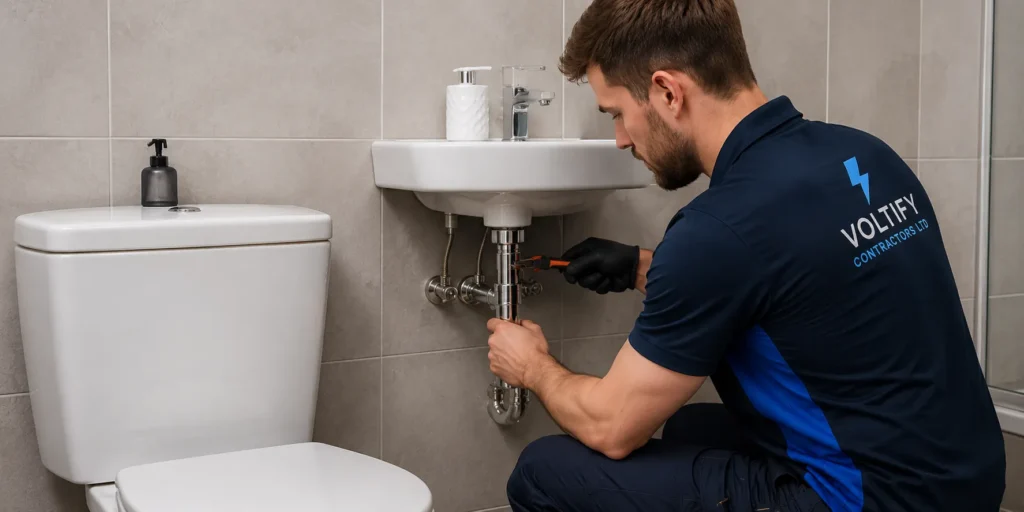
These are the day-to-day faults: a leaking trap under the sink, a broken window handle, a light that has stopped working, sealant that has failed round the shower. The priority is getting access arranged quickly and fixing the fault properly the first time, so the same tenant is not reporting it again a month later. Faults involving water or electricity are usually dealt with through our plumbing repairs or electrical services within the same booking.
Work between tenancies
When a property is empty, it is the best time to deal with everything that is awkward while someone is living there: filling and painting walls marked by furniture and fixings, replacing worn door handles, resealing the bath, fixing loose skirting and checking that every tap, light and appliance works. The time between tenants is often short, so a clear list, sent with the check-out report or photos, lets the work be planned to fit.
Routine upkeep
Some landlords prefer a visit at set points in the year to catch small problems early. If that suits your portfolio, ask about regular visits when you get in touch so the arrangement can be agreed. Our landlord maintenance checklist sets out what is worth checking at each point, from move-in day to the void period.
Small Faults That Become Expensive in Rented Homes
Tenants do not always report minor problems, and some of them get worse quietly. These are the ones worth dealing with as soon as they are noticed:
| Minor issue | What it can lead to if left |
|---|---|
| Split or blackened sealant around a bath or shower | Water getting behind the tiles or through to the ceiling below, which then needs leak tracing and repair as well as redecoration |
| A slow drip under a sink or behind a toilet | Swollen kitchen units, rotten flooring and damage to a neighbouring flat |
| Bathroom or kitchen extractor fan not working | Condensation and mould on walls and ceilings, which often leads to complaints and redecoration |
| Door that no longer latches or window that will not lock | A security problem for the tenant and the property |
| Cracked or loose socket or switch | An electrical safety concern that should be looked at promptly |
Asking tenants to report these early, with a photo, usually costs less than finding them at the end of a tenancy.
How Landlord Property Maintenance Jobs Are Arranged
Most delays in rental maintenance come from access and unclear instructions rather than the work itself. A job runs smoothly when the following is agreed at booking:
- Who arranges access. Either you or your agent book a time with the tenant, or you pass on the tenant’s contact details so a visit can be arranged directly.
- What is approved. A clear description of each job, and what should happen if a repair turns out to need more than expected, such as reporting back before carrying out extra work.
- Who supplies parts. Replacement items such as blinds, taps or light fittings can be bought by you in advance; if you would prefer them sourced, say so when you book so it can be confirmed.
- Who is billed. Whether the invoice goes to you or your managing agent.
When a list mixes repairs with fitting tasks, such as new shelves, curtain poles or flat-pack furniture for a furnished let, our general handyman services page explains how a mixed list is organised into one visit. For the repairs themselves, property repairs covers how to tell surface wear from a sign of something more serious, and damaged walls and ceilings are covered in detail on our drywall and wall repair page.
Safety Checks and Work Outside This Service
Letting a property comes with safety responsibilities that go beyond maintenance. Annual gas safety checks must be carried out by a Gas Safe registered engineer and are not part of this service. For the electrical side, our electrical testing, inspection and safety checks page explains what testing involves; confirm with us what documentation you need before booking. For an overview of what landlords are responsible for, see the government’s guidance on renting out a property.
Structural problems, roof work and specialist drainage are also outside landlord maintenance visits. If a reported problem points to one of these, we will tell you rather than carry out a repair that only hides it.
Larger clients with a mix of residential and commercial buildings may also find our commercial property maintenance page useful for offices, shops and communal areas.
Costs and Out-of-Hours Problems
The documented minimum call-out is £80 for the first hour, which usually covers a single small repair. Void-period work and longer lists are priced on the work involved. What changes the cost is mainly the number of jobs, the materials and parts needed, whether redecoration is required after a repair, and access, such as a top-floor flat without a lift or a tenant who is only available at certain times.
Standard visits run 7am–5pm, Monday to Friday. For problems that cannot wait, such as a burst pipe or a total loss of power in a tenanted property, out-of-hours emergency call-outs are available and are priced differently from standard-hours work.
Send your job list or the tenant’s report, with photos if you have them, and contact Voltify Contractors to arrange the work. You can also check the areas we cover.