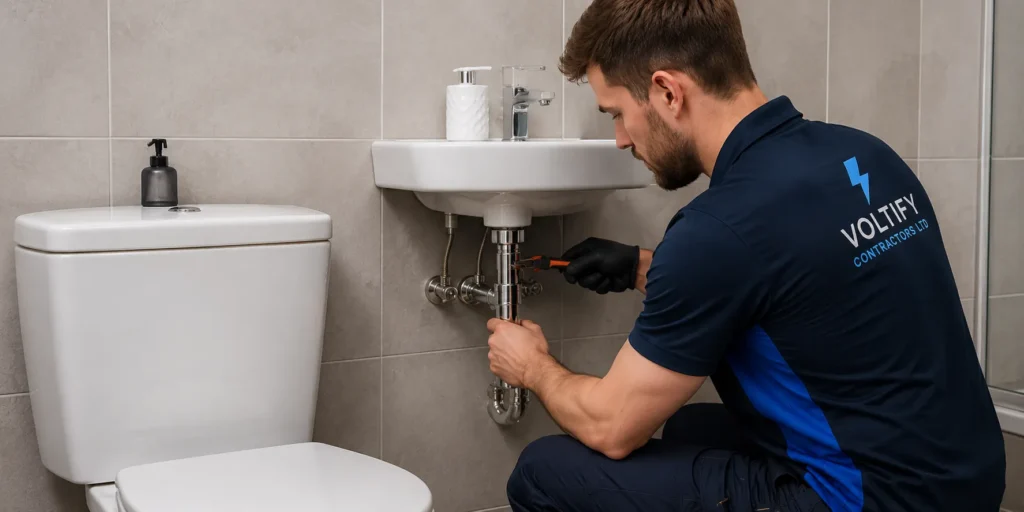

A landlord property maintenance checklist works best when it is organised by when things need doing rather than by room. Some checks have deadlines set by law, some need repeating every time a tenancy starts, some are seasonal, and some are far easier while the property is empty. Grouping them that way makes it obvious what is due, what is overdue and what can wait for the next void.
This checklist is written for landlords of residential property in England. The safety duties are summarised from government and HSE guidance and linked so you can check the detail that applies to you. Wales, Scotland and Northern Ireland have their own rules, and a licence, lease or mortgage condition can add requirements of its own.
1. Checks with fixed legal deadlines
These are the items that cause the most trouble when they slip, because the deadline comes from regulation rather than convenience. Put every date in one calendar with a reminder a month ahead.
- Gas safety check every 12 months. Every gas appliance, fitting and flue you provide must be checked annually by a Gas Safe registered engineer (HSE). Existing tenants must receive a copy of the record within 28 days of the check, new tenants before they move in, and records should be kept for at least two years (HSE: gas safety records).
- Electrical installation inspected at least every five years. The fixed wiring must be inspected and tested by a qualified and competent person, tenants given the report, and any remedial work the report requires completed within 28 days or sooner if the report says so (GOV.UK). Our guide to what an electrical safety check covers explains the C1, C2, C3 and FI codes you will see on the report.
- Smoke and carbon monoxide alarms. At least one smoke alarm on every storey used as living accommodation, and a carbon monoxide alarm in any room with a fixed combustion appliance (gas cookers excepted). Alarms must be checked as working on the day a new tenancy begins and repaired or replaced as soon as reasonably practicable once reported faulty (Smoke and Carbon Monoxide Alarm (Amendment) Regulations 2022).
- Legionella risk assessment. Landlords have a duty to assess the risk from legionella, but for most homes this is a simple assessment rather than a laboratory test. HSE’s guidance comes down to keeping hot water hot, cold water cold and water moving, including flushing the system through before a property is let (HSE: legionella and landlords).
Two practical points. The electrical report and the gas record are separate documents from separate trades, so book them independently rather than assuming one visit covers both. And when the electrical report lists remedial items, the 28-day clock starts from the inspection, so it pays to have whoever will do the work lined up before the report arrives.
2. On the first day of every tenancy
Move-in day is the one point where the law, the inventory and the tenant’s first impression all meet. A short, consistent routine covers all three:
- Test every smoke and carbon monoxide alarm and note that you did, with the date.
- Run every tap and shower and flush every toilet. Look under sinks, around the base of the toilet and at the edge of the shower tray for drips. After an empty period, this also clears water that has been standing in the pipes.
- Show the tenant where the stopcock and the consumer unit are, and check the stopcock actually turns. A seized stopcock is a small fix now and a serious problem during a leak; our guide to what to do with a burst pipe is a useful link to pass on.
- Open, close and lock every window, and check the external doors latch and lock properly with the keys being handed over.
- Switch on the kitchen and bathroom extractor fans and hold a sheet of paper to the grille. A fan that runs but does not draw air is as common as one that does not run at all.
- Power up and briefly run every appliance you supply, and leave the manuals in the property.
- Photograph walls, floors, sealant, worktops and fixtures for the inventory, so wear can be told apart from damage later.
- Hand over the current gas safety record, the electrical report and any other documents you are required to give.
3. Routine checks through the year
Much of the costly damage in rented homes starts small and goes unreported, often because the tenant does not realise it matters. A routine visit, arranged with the tenant and with proper notice, catches it early. Timing the visits to the seasons means each one has a clear focus:
| When | What to look at | Why it matters |
|---|---|---|
| Early autumn | Heating works before it is needed; radiators heat evenly; reachable gutters and downpipes are clear; outside pipes and taps are lagged | Heating faults and frozen pipes are the most common cold-weather call-outs, and both are easier to prevent than to fix in a hurry |
| Mid-winter | Condensation and black mould on window reveals, behind furniture and in bathroom corners; extractor fans working and being used | Damp and mould complaints build through winter, and the cause is often ventilation rather than a leak |
| Spring | Sealant and grout around baths, showers and sinks; external paintwork, window frames and sills for rot or flaking | Failed sealant lets water behind tiles and through ceilings; exterior wear is easier to deal with before the next winter |
| Every visit | Under sinks; ceilings below bathrooms; cracked or scorched sockets and switches; doors and windows lock; alarms sound when tested | These are the faults most likely to escalate quietly between visits |
Ask tenants to report problems early, with a photo, and respond promptly to damp and mould reports in particular. Expectations here are rising: specific repair timescales for damp, mould and other serious hazards (Awaab’s Law) already apply to social landlords, and the government has said it intends to extend them to private rentals and to apply an updated Decent Homes Standard to the private rented sector from 2035 (MHCLG). Councils can already inspect privately rented homes for hazards under the Housing Health and Safety Rating System (GOV.UK).
If you want to understand what small faults tend to turn into when they are left, our landlord property maintenance page sets out the common examples and how tenant-reported repairs are arranged.
4. Between tenancies: the void-period list
An empty property is the time for jobs that are noisy, messy or awkward with someone living there. Voids are often short, so work through the list in order of priority:
- Safety items first. Clear any outstanding remedial work from the gas record or electrical report, and replace smoke and CO alarms that are near the end of their life (the expiry date is usually printed on the alarm).
- Water. Reseal baths and showers, fix dripping taps and running cisterns, and check ceilings below bathrooms and kitchens for staining.
- Security. Ease sticking doors, replace worn handles and hinges, check window locks, and change locks if keys cannot all be accounted for.
- Walls and decoration. Fill holes left by the last tenant’s fixings, repair dented or cracked plaster, and repaint where marks will not wash off. Larger areas of damage are covered on our drywall and wall repair page.
- Floors and trims. Lifting laminate, loose skirting and damaged thresholds are trip hazards as well as wear.
- Final run-through. Run water through every outlet, check every light works, clean extractor fan grilles and run each appliance before the new tenant arrives.
If the gap between tenants is tight, send the check-out report and photos to your contractor before the keys come back. Materials can then be ordered and time booked so the work starts on day one of the void rather than after a first visit to look.
5. Keep a simple record for each property
A spreadsheet or a folder per property is enough. For each one, record the dates of the gas safety check, the electrical inspection and the alarm tests at each move-in; every repair reported, when you responded and what was done; and invoices and before-and-after photos. If a deposit dispute, a complaint or a council inspection comes up, a dated record of what was checked and fixed is far more persuasive than memory.
Key takeaway: diarise the dated duties (gas every 12 months, electrics at least every five years, alarms tested at every move-in), give each routine visit a seasonal focus, and save disruptive work for voids. Most rental repairs get expensive because they are found late, not because they are difficult.
If you would rather hand the list to one contractor, Voltify Contractors’ landlord maintenance service covers tenant-reported repairs, void work and routine visits across handyman, plumbing, electrical and decorating jobs. Annual gas safety checks are carried out by a Gas Safe registered engineer and are not part of that service. Landlords with shops or offices in the same portfolio may also find the commercial property maintenance checklist useful.