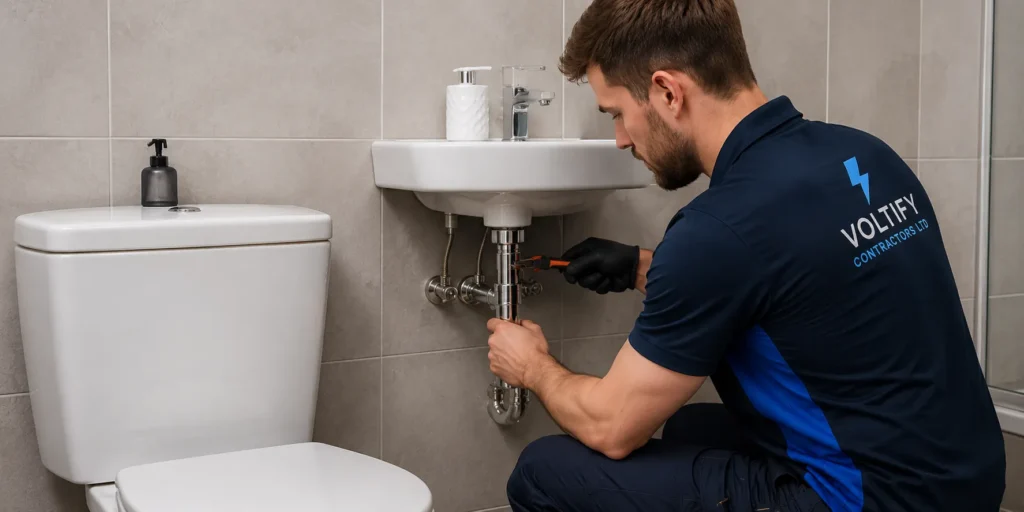

Property maintenance in a Canary Wharf flat usually starts with a question a house owner never has to ask: is this repair mine, or the building’s? If your apartment is in a purpose-built block run by a managing agent, as many in and around Canary Wharf are, the flat owner or tenant normally deals with what is inside the flat, while the building deals with the structure, shared services and communal areas. The lease draws the exact line, and in taller blocks building-safety rules also limit what can be changed inside the flat.
This guide covers what tends to be different about maintaining an apartment in a managed block: who is responsible for what, the safety rules that apply in high-rise buildings, why leaks and noise matter more when you have neighbours above and below, and how to plan small jobs so they do not get stuck at the concierge desk.
Yours or the building’s? A starting point
Every lease is different, so treat this as a guide to what to check rather than a rule. Tenants should report everything to their landlord or letting agent, who then sorts out who pays.
| Item | Usually dealt with by | Worth checking |
|---|---|---|
| Taps, toilets, sinks, showers and their seals | Flat owner | Where the flat’s own isolation valve or stopcock is |
| Pipework between your stopcock and your fittings | Flat owner | Whether any pipework runs through a shared riser before reaching your flat |
| Main risers, communal pipework and drainage stacks | The building | How to report a fault out of hours |
| Sockets, switches, lights and the consumer unit in the flat | Flat owner | Where the flat’s consumer unit and meter are; meters are sometimes in a corridor cupboard |
| Heating and hot water from a communal system | Often the building or a heat supplier, at least up to the unit in your flat | Who services the heat interface unit, if your flat has one |
| Flat entrance door | Often the building, because it is a fire door | Whether you may change the door, lock, letterbox or closer at all |
| Windows and balconies | Often the building | Who cleans, repairs and replaces them |
| Fitted appliances, extractor fans, decoration and flooring | Flat owner | Any lease rules on flooring and ventilation |
| Sprinkler heads and smoke detection linked to the building | The building | Never paint, cover or move them |
If you are unsure, ask the managing agent before booking anyone. A repair to something the building is responsible for may be done at no direct cost to you, and work on shared parts arranged without permission can cause problems later.
Rules that apply in high-rise blocks
Under the Building Safety Act 2022, a residential building in England with at least 7 storeys, or at least 18 metres high, and at least 2 homes is a higher-risk building. Residents of these buildings have legal duties. According to GOV.UK guidance for residents, you must not damage, remove or interfere with relevant safety items such as fire doors, signage, sprinklers, smoke alarms or fire extinguishers. You should also not carry out work that creates or increases a risk of fire spreading or of structural failure, and you should tell the building’s accountable person about planned work in your home before it begins.
In practice, that affects some everyday maintenance jobs:
- Decorating: sprinkler heads, smoke detectors and the seals on fire doors must not be painted over. Mask them off, or leave them for the building to deal with.
- Drilling and new holes: mounting a TV or fitting blinds on an internal wall is routine. A new hole through a wall or ceiling that separates your flat from a corridor, riser or neighbouring flat is different, because those walls are part of the building’s fire separation. Check with the building first.
- The front door: fitting a new lock, spyhole, letterbox or door closer to a flat entrance door can affect its fire performance. Most buildings need to approve this.
- Kitchens and bathrooms: moving fittings can mean new routes for pipes and cables, so tell the building before work starts.
Sprinklers are increasingly common in flats. Since 2020, the fire-safety guidance for new blocks of flats in England has called for sprinklers in buildings over 11 metres high (MHCLG circular on Approved Document B). If you have them, keep furniture, shelving and curtains clear of the heads, and do not hang anything from the pipework.
Leaks travel downwards
In a house, a slow leak under the bath damages your own ceiling. In a block, it damages your neighbour’s. Leaks in flats are often found by the people living below, sometimes long after they started, and a claim against the building insurance may follow. Small habits make a real difference:
- Find your flat’s stopcock now, not during a leak. In apartments it is often in a kitchen cupboard, behind a bath panel or in a utility cupboard, and occasionally in a riser outside the flat.
- Check the hoses and valves behind the washing machine and dishwasher every so often, and replace hoses that are kinked, cracked or bulging.
- Look at the silicone around the bath, shower tray and kitchen sink. Gaps or black mould along the seal let water reach the floor.
- Take damp patches on your own ceiling seriously; they may be coming from the flat above, which the building can help trace.
If water is already escaping, our guides to dealing with a water leak at home and what to do with a burst pipe explain the first steps, including when to tell the building and the neighbours below.
Floors, noise and fixings
Sound travels in blocks of flats, so many leases restrict hard flooring or require an acoustic underlay, and many buildings limit noisy work such as drilling to set hours. Check both before replacing a floor or planning a day of fixing shelves and brackets. If you are weighing up a damaged laminate floor, our guide on whether to repair or replace laminate flooring explains where lease requirements come into the decision.
Walls also vary within the same flat. Internal partitions are often plasterboard on a frame, while walls to the corridor or neighbours and the ceiling above may be concrete. Each needs different fixings, and the heavier the item, the more it matters. Our TV mounting checklist explains how to tell wall types apart before buying a bracket.
Ventilation and condensation
Modern apartments are built to be airtight, which keeps heat in but also keeps moisture in. Many rely on extractor fans in kitchens and bathrooms, and some have a whole-flat mechanical ventilation system with filters that need cleaning or replacing. When a fan stops working, or a ventilation system is switched off to save electricity or reduce noise, condensation and mould around windows and in bathrooms often follow. A fan that runs but barely draws air may have a blocked filter or duct rather than a failed motor. Our extractor fan installation and repair page covers replacing and repairing fans. If the ductwork is shared with other flats, ask the building before changing it.
Landlords and flats between tenancies
When a flat is let, every repair gains a third party. Tenants report to the landlord or agent, the landlord arranges the work, and the building may still need to approve it and book in the contractor. A void period between tenancies is the easiest time to get through a list of jobs, because nobody’s daily routine is disrupted and access is simple. Our landlord property maintenance checklist sets out what to check at each stage of a tenancy, and the landlord property maintenance page explains how repairs can be arranged on a landlord’s behalf.
Getting a repair booked in a managed building
Most delays to small jobs in managed blocks are about access rather than the repair itself: a contractor not on the visitor list, no parking or loading space, a service lift not booked, or work starting outside permitted hours. The Canary Wharf area page lists the access questions to settle with your building before a visit, along with standard working hours and call-out costs.
Voltify Contractors covers Canary Wharf and the wider E14 area for plumbing, electrical work, decorating, appliance installation and general repairs. If your list mixes trades, the plumbing, electrical and handyman and property maintenance pages explain what each covers. It helps to mention everything at once, so the work can be planned as one visit rather than several. For houses and older blocks elsewhere in the area, our guide to common property repairs in East London covers the problems that come with different building ages.