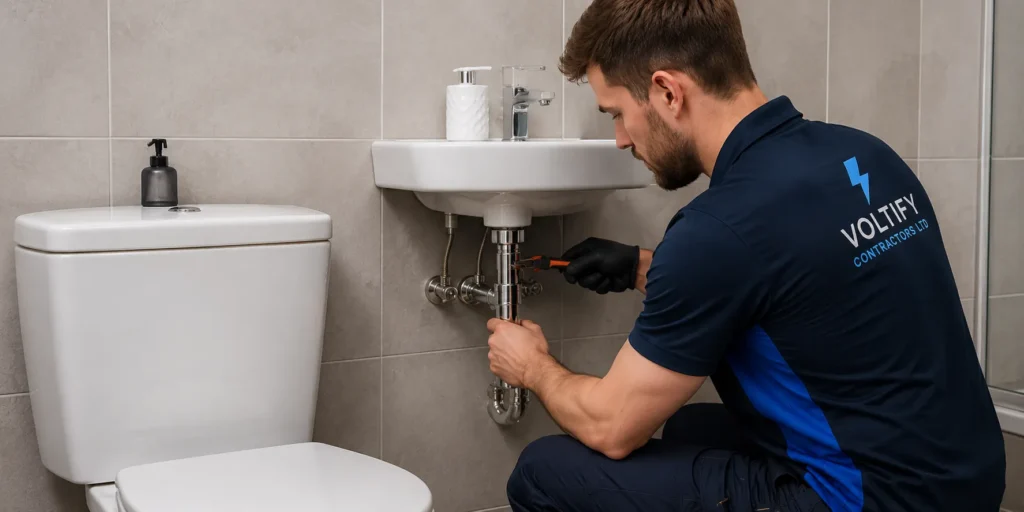

If a pipe has burst, turn the water off at the stopcock first, then open your cold taps to drain what’s left in the pipes. Those two steps stop fresh water feeding the leak and empty the pipework, which is what limits the damage. Everything else — protecting electrics, saving belongings, calling a plumber — comes after the flow is under control.
This guide covers what to do with a burst pipe in the minutes before help arrives, including the situations where closing the stopcock doesn’t stop the water completely.
The first five minutes
- Close the internal stopcock. Turn it clockwise until it stops. It’s most often under the kitchen sink, but can be in a downstairs toilet, under the stairs, in a utility cupboard or, in many flats, in a hallway cupboard or riser.
- Open the cold taps — kitchen sink first, then the bath and basins — to drain the water sitting in the pipes so it comes out of the taps rather than the split.
- Turn off the heating and water heating. Switch off the boiler or immersion heater so the system isn’t firing with water draining out of it.
- Keep water away from electrics. If water is near sockets, light fittings or the consumer unit, switch the electricity off at the mains — but only if you can reach it without standing in water or touching anything wet.
- Contain and record. Put down towels and buckets, move what you can out of the way, and take photos and video of the burst and the damage before anything is moved or repaired.
Thames Water’s own burst-pipe advice follows the same order: stop tap off, heating off, taps open, and electrics switched off at the mains if water is near them.
When the stopcock doesn’t stop the water
Closing the stopcock cuts off the mains supply coming into the property. In many homes that stops everything. In some, it doesn’t — and this is where people lose time wondering why water is still pouring out.
Homes with a cold water tank in the loft
Older houses, and homes with a hot water cylinder, often have a cold water storage tank in the loft feeding the bathroom taps, toilets and hot water. The stopcock stops the tank refilling, but whatever is already in the tank can keep draining into a burst pipe downstream of it. To empty it faster, open the bath and basin cold taps and flush the toilets. If there’s a valve on the pipe leaving the tank and you can reach it safely, closing it will isolate the tank — but don’t climb into an unboarded loft in a hurry to find it.
A burst on the heating system
A split radiator pipe or valve may be on the central heating circuit rather than the water supply. Sealed heating systems lose pressure quickly and stop leaking once empty; tank-fed systems may keep topping up from a small feed tank in the loft. Turning the heating off is the priority either way, and the boiler should stay off until the pipe has been repaired and the system refilled.
A seized or missing stopcock
If the stopcock won’t turn, don’t force it with tools — an old valve can snap and make things worse. Many properties also have an outside stop valve, usually under a small cover in the pavement or front garden near the boundary, though it can be hard to open without a proper key. In a block of flats, a building manager or concierge may be able to isolate your flat’s supply. Tell the plumber straight away that the water can’t be turned off; it changes how urgently they need to attend.
Things not to do
- Don’t touch switches, sockets or appliances that are wet, and don’t use them until they’ve been checked.
- Don’t stand under a ceiling that is sagging or bulging with water. Plasterboard holding water can give way suddenly. Keep people out of the room.
- Don’t turn the water back on to “see if it’s still leaking”. It will be, and at full pressure.
- Don’t use a naked flame or heat gun on a frozen pipe. It can damage the pipe and start a fire.
- Don’t throw away damaged items before photographing them if you’re likely to claim on insurance.
If the pipe froze first
Many winter bursts happen in two stages. Water freezes and expands inside a pipe in a loft, garage, outside wall or unheated cupboard, splitting it. Nothing leaks while it’s still ice. The water only appears when the pipe thaws — sometimes days later, often while nobody is home.
So if a pipe is frozen but hasn’t leaked yet, treat it as a burst waiting to happen: turn off the stopcock, open the tap that pipe feeds, and thaw it slowly with a hot water bottle or warm towels, starting from the tap end. Before turning the water back on, run a dry cloth along the pipe to check for splits. If you find one, keep the water off.
Can you patch it yourself while you wait?
Once the water is off, a pipe repair clamp or self-amalgamating repair tape from a DIY shop can sometimes slow a small weep from an accessible pipe. That’s a stopgap, not a repair. It won’t reliably hold a split under full mains pressure, and it won’t help with a failed fitting or a leak you can’t see. The safest assumption is that the water stays off, or isolated at a local valve, until the damaged section has been properly cut out and replaced.
Who to contact, and in what order
- A plumber, once the water is off or if you can’t get it off. If water is still escaping, or has come through a ceiling, that’s a call for an emergency plumber rather than a routine booking.
- Your neighbours, if you live in a flat or terrace and water may have reached them — or if the water is coming from their property, not yours.
- Your landlord or managing agent, if you rent. Report it promptly with photos; repairs to supply pipework in a rented home are normally the landlord’s responsibility.
- Your insurer. Some policies have a claims line that wants to be told first or uses its own contractors, so check before authorising major work.
If the burst is outside — water bubbling up in the street or pavement — that is usually the water company’s main, not your plumbing, and should be reported to your water supplier.
What to tell the plumber when you call
A few details help the first visit go further:
- where the burst is and whether you can see it (a pipe under a sink is very different from one inside a ceiling void);
- whether the water is fully off, partly off, or still running;
- the pipe material if you can tell — copper, plastic or lead;
- whether the pipe was frozen, and whether you have a loft tank or a combi boiler;
- whether water has reached electrics, the floor below, or a neighbour.
On the visit, the priority is making the system safe and, where possible, restoring water to the rest of the property. How the split itself is repaired — and why some bursts get a temporary fix first — is covered on our burst pipe repair page, and our guide to burst pipe repair costs explains what drives the bill and what insurance usually covers. If you’re dealing with a slower drip or a damp patch rather than a sudden burst, our guide on what to do when you have a water leak at home is a better starting point.