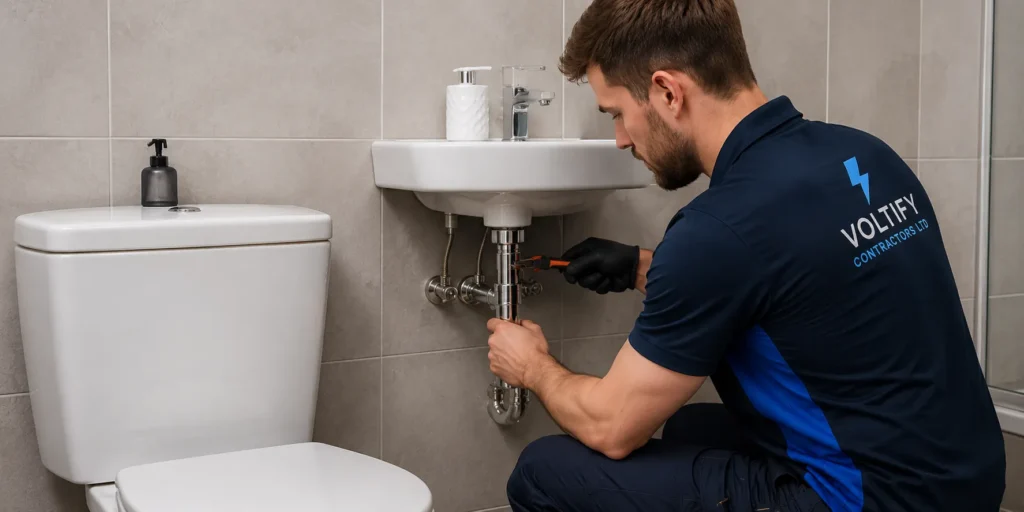

Changing one tap is a repair. Replacing the bath, moving the toilet or fitting a new vanity basin is different: the pipes and wastes behind every fitting are connected, and the order in which the work happens matters as much as the fittings themselves. Bathroom plumbing covers that room-level work — refits, suite replacements, layout changes and the pipework that serves them — for homes, rented flats and commercial washrooms across East and South-East London.
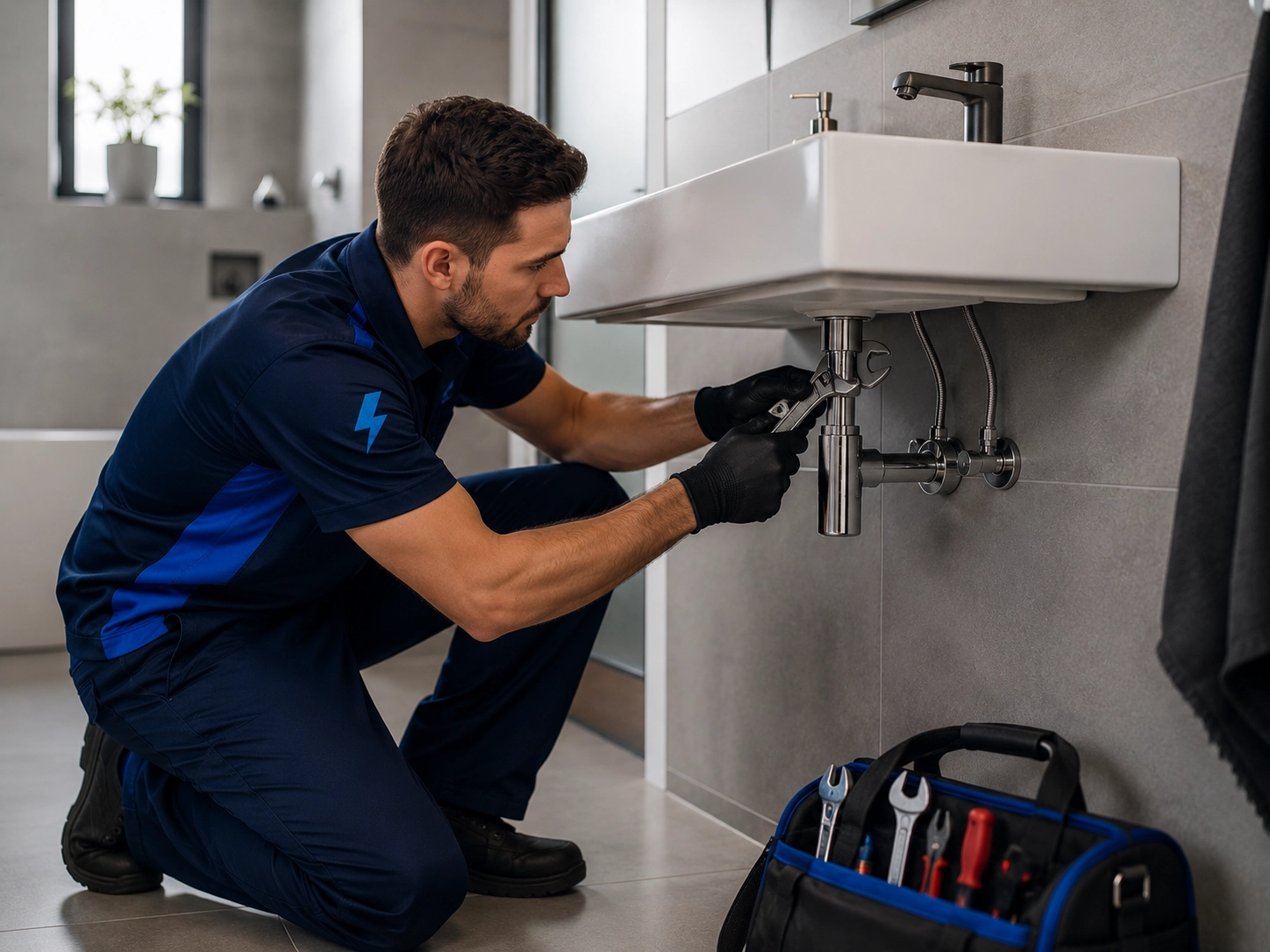
If you only need one fitting looked at, a dedicated page will be quicker: toilet repair and replacement, tap repair or shower repair and installation. This page is for when several of those are happening at once, or when the layout is changing. For everything else in the house, see our full range of plumbing services.
What Changes When More Than One Fitting Is Involved
A single-fitting job usually connects to pipework that is already in the right place. A bathroom refit often doesn’t. Supplies may need extending or rerouting, wastes may need new routes to the soil stack, and old isolation valves, corroded pipe sections or undersized wastes tend to come to light once the old suite is out. Planning for that at the start avoids having to open a newly tiled wall later.
It’s also the point at which small improvements are cheapest to make: an isolation valve on every fitting, a removable access panel for the bath trap, or better support for pipework running under the floor.
First Fix and Second Fix
Bathroom plumbing is normally split into two visits, with other trades working in between.
| Stage | When it happens | What it covers |
|---|---|---|
| Strip-out and capping | Before anything else | Isolating and capping supplies, removing the old suite so the room can be prepared |
| First fix | Before walls are boarded, tiled or finished | Running new supply pipes and wastes to where each fitting will go; fitting concealed valves and cisterns; pressure-testing |
| Other trades | Between the two plumbing visits | Boarding, plastering, waterproofing, tiling, electrical work and flooring |
| Second fix | Once surfaces are finished | Fitting the toilet, basin, bath or tray, taps, shower and wastes; commissioning and checking every joint |
If you are managing the refit yourself, the first-fix positions need to be agreed before tiling starts. Moving a pipe tail by a few centimetres is easy on bare walls and awkward through finished tiles.
Moving the Toilet, Basin or Bath
Layout changes are where bathroom plumbing gets harder, mostly because of wastes rather than water supplies.
Toilets
A toilet needs a 100mm (4-inch) waste that runs to the soil stack with enough fall. Moving it a short distance along the same wall is often manageable; moving it across the room may need the floor opening up, and in some buildings the joists or a concrete floor make a gravity waste impractical.
Baths and showers
Bath and shower wastes are smaller, but they still need a steady fall. Low shower trays and walk-in showers leave very little depth for the trap, which can mean raising the tray or cutting into the floor.
Where gravity won’t work
A macerator or pumped waste can serve a toilet or shower where a gravity connection isn’t possible. They have their place, but they need power, occasional maintenance and care over what goes down them, so they are normally a last resort rather than the first option.
In flats, changes to the soil stack or anything shared with neighbours may need the freeholder or managing agent’s agreement first.
Pressure, Hot Water and Older Systems
New fittings are often chosen before anyone checks what the house can supply. Many modern mixer taps and showers need mains or higher pressure and give a poor flow on a tank-fed system. A combi boiler can struggle to feed a bath and a shower at the same time. It’s worth checking the minimum pressure on each product before ordering, and telling us what system you have. Work on the boiler itself is for a Gas Safe registered engineer and is outside this service.
Older bathrooms can also hide lead or iron pipework, or plastic and copper joined with fittings that were never meant to go together. If sections need replacing, that’s covered under pipe repairs and replacement and is best done while the room is stripped.
Living With a Bathroom Out of Action
Refits disrupt more than one room. It helps to think through:
- whether there is a second toilet in the property, and if not, whether the toilet can be kept working until second fix;
- keeping the water on to the rest of the building while the bathroom is isolated — worth checking early if isolation valves are missing;
- in rental property, how long tenants will be without a bath or shower, and how that is communicated;
- ventilation, since a new bathroom is a good time to fit or upgrade an extractor fan.
Getting a Bathroom Plumbing Quote
The most useful things to send are photos of the room as it is now, a rough sketch of the new layout, the fittings you’re planning to use (or links to them), and whether the property is a house or a flat. It also helps to say who is handling tiling, boarding and electrics. Bathroom work is quoted from that information, usually after a look at the space, because the main variables — floor construction, the route to the soil stack, the condition of existing pipework and access — can’t be judged from a list of fittings. Our bathroom plumbing checklist covers what to find out about your system and check on each product before you order.
If you’re only planning at this stage, get in touch and describe what you have in mind. If water is leaking from a bathroom right now, go to our emergency plumber page instead. We cover East and South-East London; see the areas we cover.