
A door handle through the wall, a hole left by a removed TV bracket, a crack that keeps running along the ceiling or a patch of board that has gone soft after a leak: each of these needs a different repair. Drywall repair is about choosing the right method for the damage, so the finished wall is sound, flat and invisible once it is painted.
In the UK, drywall is usually called plasterboard, and most modern internal walls and ceilings are made from it. Voltify Contractors repairs plasterboard and plastered walls in homes, rented properties and commercial premises across East and South-East London, as part of our handyman and property maintenance work. Older solid plaster and lath-and-plaster walls are covered below too, because they behave differently.
Matching the Drywall Repair to the Damage
The size and cause of the damage decide the repair, and it is worth knowing which you are dealing with before asking for a price.
| Damage | Usual repair |
|---|---|
| Dents, scuffs and small fixing holes | Filled, left to dry, sanded flush and spot-primed |
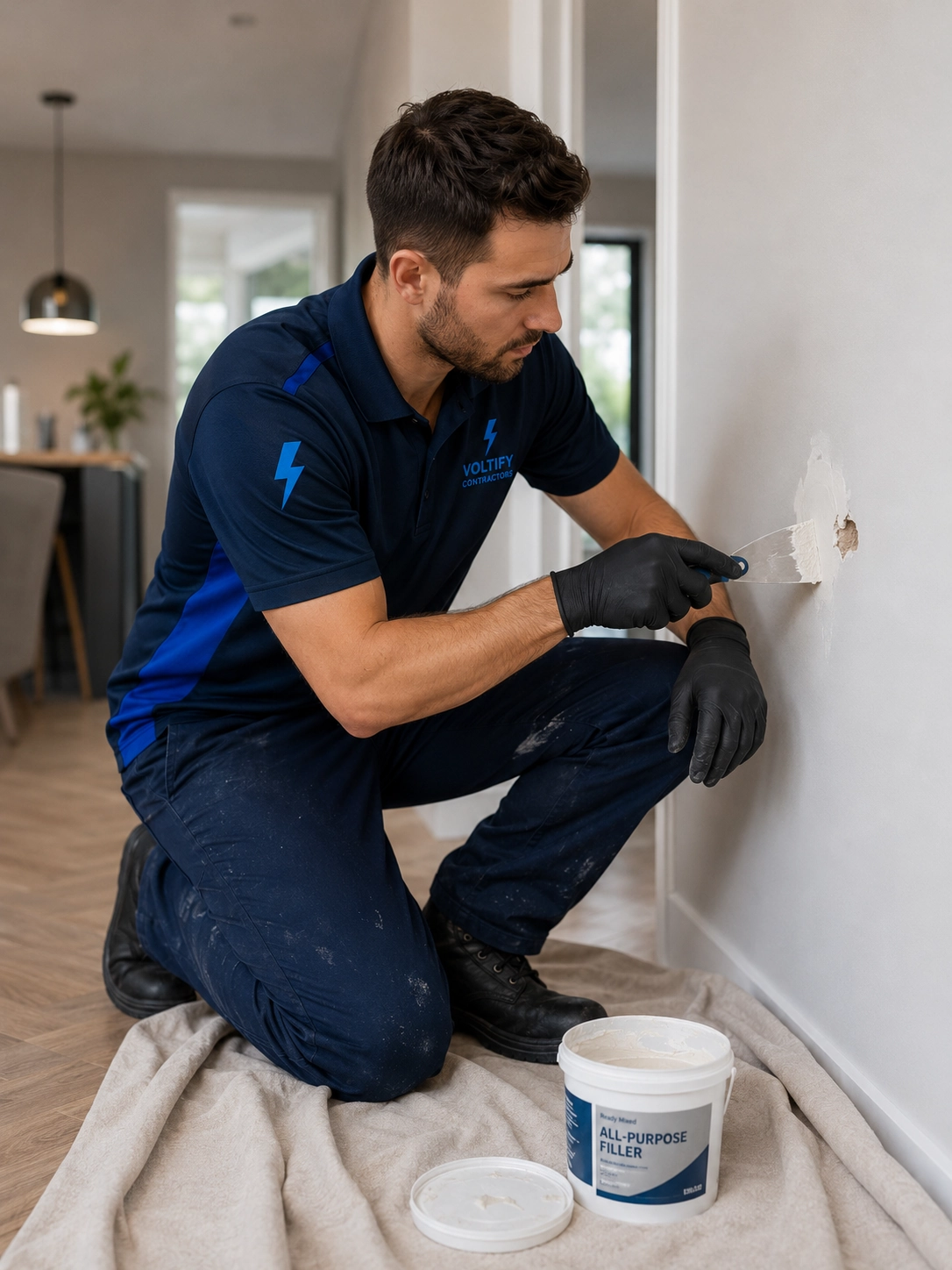
| Holes up to roughly fist size, such as from a door handle | A mesh or backed patch is fitted across the hole, then filled in layers and feathered out |
| Larger holes or badly broken board | The damaged area is cut back to a neat rectangle, a new piece of plasterboard is fixed to timber supports, and the joints are taped and filled |
| Cracks along board joints | Loose tape and filler are cut out, the joint is re-taped and filled; screws are checked if the board has moved |
| Screw or nail heads showing through | The board is refixed with new screws beside the old fixing, and both are filled over |
| Damaged external corners | A new corner bead is fitted and the corner rebuilt with filler |
| Board stained, soft or crumbling from water | The leak is fixed first; the wet board is cut out and replaced once the area has dried |
Filling a large hole without a backing, or filling over a cracked joint without re-taping it, is the most common reason a repaired patch sinks, cracks or shows through the paint later. If you are not sure whether your board can be patched at all, our guide on whether to repair or replace damaged drywall walks through the deciding factors.
Plasterboard, Solid Plaster and Lath and Plaster
Tap the wall. Plasterboard fixed to a timber or metal frame sounds hollow between the studs and solid over them. Plaster applied straight onto brick or block sounds solid everywhere. Older houses may have lath and plaster, where plaster is spread over thin timber strips; it often feels uneven and may crumble at the edges of any damage.
This matters for the repair. Plasterboard is patched or a section replaced. On solid walls, areas of plaster that have come away from the brickwork, known as blown plaster, sound hollow and usually need cutting back and making good. Damaged lath and plaster can often be repaired in sections, but where a large area is loose, overboarding or replastering may be the more sensible option, and that is discussed before any work goes ahead.
When the Wall Damage Has a Cause Behind It
Some wall damage is simply an accident. Some is a symptom, and repairing only the surface means doing it again:
- Brown staining or softness, especially under a bathroom or near pipework, points to a leak. It needs tracing through our leak detection and repair service before the board is replaced.
- Cracks that return or widen, particularly diagonal cracks from the corners of doors and windows, may indicate movement in the building. That is a question for a surveyor or structural engineer rather than a filler job.
- A hole with cables or pipes visible should not be patched until they have been checked. Anything electrical is looked at through our electrical services first.
Repairing Walls Where Fixings Have Been Removed
Taking down a TV bracket, a heavy shelf or kitchen wall units often leaves more damage than expected, because heavy-duty plasterboard fixings pull out a section of board with them. If you plan to hang something heavy in the same place again, say so. A repair that only needs to take paint is different from one that needs a timber noggin fitted behind the board so it can carry weight again. If a screen is going back up once the wall is repaired, our TV mounting page explains how brackets and fixings are matched to the wall.
This comes up a lot at the end of a tenancy. Landlords and agents clearing a list of marks and fixing holes can find more on how that work is organised on our landlord property maintenance page, and damaged corridors and offices are covered under commercial property maintenance.
Getting the Repaired Wall Ready to Paint
A repaired area is sanded smooth and primed so the new paint does not soak in and leave a dull patch. Even so, a single touched-in patch on an older painted wall can show, because the existing paint will have faded. If the repair is in the middle of a wall, painting the whole wall from corner to corner usually gives the best result. That can be arranged through our interior painting service if a whole room needs doing, and where the rest of the wall needs cracks filled, stains sealed or flaking paint dealt with first, see wall preparation and filling.
What Affects the Price
The documented minimum call-out is £80 for the first hour. Several small holes can often be dealt with in that time; larger repairs are priced on the work. The main variables are the size and number of damaged areas, whether new plasterboard, timber supports or corner bead are needed, whether the wall is plasterboard, solid plaster or lath and plaster, ceiling height and access, and how many visits the filling needs, since deep repairs are built up in layers that must dry between coats.
If the wall repairs are part of a longer list of small jobs, see how a mixed visit works under general handyman services. Otherwise, send photos of the damage with something in shot for scale and contact Voltify Contractors for a price. You can also check the areas we cover.